
Choosing a central vacuum system is a little different from buying a regular vacuum cleaner. Instead of carrying a vacuum from room to room, you connect a lightweight hose to wall inlets around your home.
The dirt travels through a pipe system to a power unit installed in a garage, basement, utility room, or another suitable location.
This setup can make cleaning more convenient, especially in larger homes with multiple floors, carpets, pets, and plenty of everyday mess.
But central vacuum systems also require more planning than a standard vacuum. You need to consider suction power, filtration, dirt capacity, installation requirements, and whether the package includes the hose and cleaning tools.
If you are searching for the best central vacuum system Consumer Reports recommends, there is one important point to understand: this guide is an independent buying guide, not an official Consumer Reports test or ranking.
This article explains the differences between various central vacuum options so you can decide which one deserves a closer look.
Top 12 Best Central Vacuum System Consumer Reports
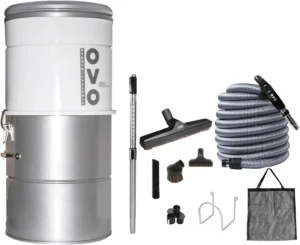
1. OVO 630 Airwatts Central Vacuum System with 30-ft Kit
The OVO 630 Airwatts system with a 30-foot accessory kit is worth considering if you want to purchase a power unit and cleaning accessories together.
Buying a bundle can simplify shopping because you can check the unit, hose, and tools as one package instead of searching for every part separately.
The 30-foot hose is the main detail to consider when comparing this package with other versions. Think about the distance between your wall inlets and the rooms you clean.
A suitable hose should let you move around furniture and reach the intended areas without making cleaning awkward.
OVO’s 630-airwatt range is aimed at homeowners looking for a whole-home cleaning setup. However, advertised power alone does not tell you how well a system will clean every carpet or floor type. Your power nozzle, brush, pipe layout, and the condition of the installation also affect results.
Pros
- A package option for shoppers who want accessories included.
- Useful for comparing complete kits with power-unit-only products.
- The 30-foot hose may suit many ordinary room layouts.
Things to check
- Confirm exactly which tools and attachments are included.
- Check whether the kit includes an electric power nozzle if you need one for carpet.
- Make sure the hose and fittings work with your inlet system.
Who should consider it? Homeowners who want to compare an OVO central vacuum bundle rather than buying a power unit and accessories separately.

2. OVO 630 Airwatts Central Vacuum System with 35-ft Kit
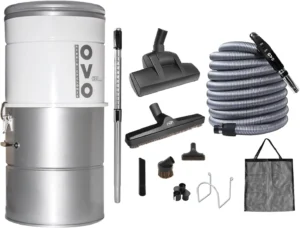
This version offers a longer hose than the 30-foot package. That difference may sound small, but hose reach can make a difference when you clean large rooms, long hallways, or areas where wall inlets are not close to every corner.
Before choosing the longer kit, think about how you will store the hose and carry it around the home. A longer hose can help you reach farther, but it can also take up more storage space and feel less convenient in small rooms. The best choice is the one that fits your layout, not automatically the one with the longest hose.
As with the 30-foot version, confirm the full accessory list. Product bundles can vary, and a package that includes a standard cleaning tool may not include the powered nozzle needed for certain carpets.
Pros
- Longer hose reach than the 30-foot version.
- Lets you compare accessory bundles before purchasing separate tools.
- May be useful for larger rooms or wider cleaning areas.
Things to check
- Verify the included hose, wand, floor tool, and any powered attachments.
- Measure the distance you need to cover from each inlet.
- Compare the price difference with the 30-foot kit before deciding.
Who should consider it? Shoppers who prefer the OVO 630 range but need more hose reach than the shorter package offers.
3. OVO 700 Airwatts Central Vacuum System with 25L Canister
The OVO 700 Airwatts model with a 25-liter canister is an option for homeowners comparing higher advertised power with a more moderate dirt-container size.
It may be a good starting point for people who want a whole-home system but do not necessarily need the larger container found on some heavy-duty models.
One useful feature of a central vacuum is that the motor unit stays in its installation area while you clean. You do not need to push a full-size vacuum cleaner around every room.
The practical advantage comes from combining the power unit with a well-planned inlet layout and the right hose and tools.
When reviewing this OVO model, check the manufacturer’s recommended home coverage and inlet count for the exact version you are buying.
These recommendations help you understand whether the unit is appropriate for your property, although the actual installation design also matters.
Pros
- Advertised 700-airwatt power.
- 25L canister offers a middle ground between compact and larger-capacity options.
- Worth comparing with OVO’s 630-airwatt and 35L models.
Things to check
- Confirm whether the listing is for the power unit only or includes accessories.
- Review the filtration method and whether disposable bags are supported.
- Check the recommended home size and inlet capacity for the exact model.
Who should consider it? Homeowners comparing a 700-airwatt OVO unit without automatically moving to the largest canister size.
4. OVO Heavy Duty 700 Airwatts Central Vacuum System with 35L Canister
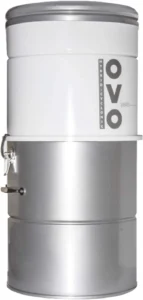
If your household produces plenty of dust and debris, a larger dirt container may be useful. The OVO Heavy Duty 700 Airwatts system with a 35L canister is designed for buyers who want more capacity than the smaller 25L version offers.
A bigger canister can mean fewer trips to empty the unit, depending on how often you vacuum and how much dirt your household collects.
This may be useful for larger homes, busy family spaces, or households that clean frequently. Still, the size of the container is only one part of the decision. You also need a suitable pipe layout, compatible accessories, and enough room for the installed unit.
The term “heavy duty” should not be treated as a guarantee that the system is suitable for every home. Check the manufacturer’s coverage recommendations and installation instructions rather than choosing by the product name alone.
Pros
- 35L canister provides more capacity than a 25L model.
- Advertised 700-airwatt power.
- Worth comparing for larger households and frequent cleaning.
Things to check
- Measure the available installation space.
- Confirm whether the bundle includes a hose and cleaning tools.
- Review the recommended coverage and inlet count for your home’s layout.
Who should consider it? Homeowners who want a higher-capacity OVO option and have enough room for the larger unit.
5. OVO 750 Airwatts Central Vacuum System
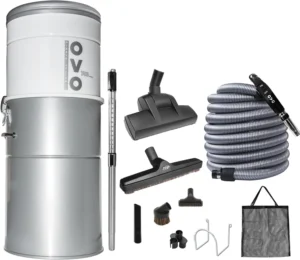
The OVO 750 Airwatts model is an option for buyers who want to compare a higher advertised air-watt rating with other systems in the same product family.
It is worth examining alongside the OVO 630 and 700 models, especially if you are choosing a unit for a large property or a demanding cleaning routine.
Do not assume that the highest air-watt figure automatically makes a vacuum the best choice. Air watts are one measure of vacuum performance, but airflow, sealed suction, filtration, hose and pipe design, and the cleaning head all affect the result. The manufacturer’s recommended home coverage is also important.
Before buying this model, confirm the exact configuration. OVO offers variations in canister size, filtration, and accessory bundles, so make sure the listing matches the version you intend to install.
Pros
- Advertised 750-airwatt power.
- Useful for comparing higher-power options within the OVO range.
- Can be evaluated alongside 630- and 700-airwatt systems.
Things to check
- Confirm the canister size and filtration configuration.
- Check the electrical requirements and installation recommendations.
- Compare the full package contents, warranty, and total cost.
Who should consider it? Buyers comparing higher-power central vacuum units who want to check whether the added performance and cost make sense for their home.
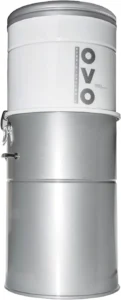
6. Prolux CV12000 Central Vacuum Power Unit
The Prolux CV12000 is worth a look if you are replacing an existing central vacuum power unit or planning a new installation.
Published product information lists airflow of up to 142 CFM and a sealed suction rating of 116 inches of water lift. These are different measurements, so they should not be treated as interchangeable numbers.
Airflow measures how much air the system can move, while water lift is a measure of sealed suction. Both can help when comparing models, but neither one alone tells the whole story about cleaning performance in a finished home.
Before choosing the CV12000, check whether the listing includes only the power unit or also a hose, electric power nozzle, wand, and floor tools.
A power unit may be suitable for an existing installation while still requiring additional purchases to make a complete cleaning setup.
Pros
- Published airflow and water-lift specifications help with comparisons.
- Worth considering for a central vacuum replacement project.
- Can be compared with OVO, Broan-NuTone, and other power units.
Things to check
- Confirm the exact warranty terms and which components they cover.
- Check compatibility with your current pipework and electrical setup.
- Work out the total cost if you need to purchase cleaning accessories separately.
Who should consider it? Homeowners looking for a dedicated central vacuum power unit and willing to check compatibility before installation.
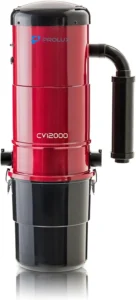
7. Broan-NuTone PP5501 PurePower Central Vacuum Power Unit
The Broan-NuTone PP5501 is a 550-airwatt central vacuum power unit. It may be worth considering if you are replacing an older unit or prefer to compare a model from the Broan-NuTone range rather than choosing only by the highest advertised power rating.
For a replacement, compatibility is especially important. The new unit needs to work with your existing pipe system and cleaning accessories.
Check the inlet style, pipe connection, electrical requirements, and the type of hose and power nozzle you use. Do not assume that every central vacuum part will fit every system.
The PP5501 is a power-unit choice, so pay close attention to what comes in the box. If you need a hose, wand, floor tool, or other accessories, include those costs when comparing it with complete kits.
Pros
- Published 550-airwatt rating.
- Worth considering for a compatible replacement installation.
- Offers another option to compare with OVO and Prolux units.
Things to check
- Confirm that your existing installation is compatible.
- Review the current warranty and parts availability.
- Check whether the listing includes a filter or disposable bag and any required accessories.
Who should consider it? Homeowners comparing a 550-airwatt Broan-NuTone unit, particularly for a replacement project.
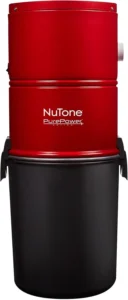
8. Broan-NuTone PP6501 Central Vacuum Power Unit
The Broan-NuTone PP6501 is another model to compare if you want to stay within the Broan-NuTone range while considering a higher advertised power level than the PP5501.
It is important to check the precise specifications on the current product listing, because similar model names can refer to different configurations or generations.
When choosing a power unit, think about the system you already have or the one you plan to install. A unit that fits your home and works with the correct cleaning head may be a better choice than a more powerful model that requires expensive changes to the rest of the system.
For a new installation, check the manufacturer’s guidance on home coverage, number of inlets, and compatible accessories.
For a replacement, compare the old unit’s connection and electrical requirements with those of the PP6501.
Pros
- An additional Broan-NuTone option for side-by-side comparison.
- May suit buyers looking beyond the PP5501 model.
- Useful to consider when comparing power-unit replacement options.
Things to check
- Verify the exact air-watt rating and other specifications on the listing.
- Check installation compatibility before ordering.
- Confirm package contents, warranty coverage, and parts support.
Who should consider it? Buyers who want to compare the PP6501 with other Broan-NuTone and whole-home vacuum options.
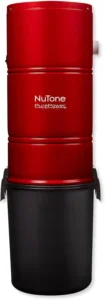
9. Broan-NuTone PP7001 Central Vacuum Power Unit
The Broan-NuTone PP7001 is another model worth comparing if you are looking for a 700-airwatt power-unit option. It belongs in your shortlist if you want to compare a Broan-NuTone unit with the OVO 700 Airwatts range, but the advertised power number should not be the only deciding factor.
Look at the full installation requirements and filtration details before buying. The size of the home, the length and layout of the pipework, the number of inlets, and the cleaning attachments can affect the way a central vacuum performs in daily use. For a replacement, a compatible unit can also save time and extra installation work.
Check the product listing carefully to see whether the PP7001 is being sold as a power unit only or as part of a kit. If it is a unit-only listing, budget separately for any tools or parts you need.
Pros
- Advertised 700-airwatt rating.
- Provides another option for comparison within the Broan-NuTone range.
- Can be evaluated against other 700-airwatt central vacuum models.
Things to check
- Verify the exact model number and published specifications.
- Confirm the required installation parts and compatible accessories.
- Compare the warranty and total purchase cost with competing systems.
Who should consider it? Homeowners comparing a higher-power Broan-NuTone power unit for a new or existing installation.
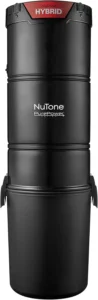
10. VacuMaid P125p Cyclonic Central Vacuum Power Unit
The VacuMaid P125p is a cyclonic central vacuum power unit. Cyclonic systems use spinning airflow to separate debris from the air, which is different from systems that rely mainly on a disposable collection bag. The right design depends on your preferences for maintenance, dust handling, and replacement supplies.
Published product information lists the P125p at 525 air watts, 116 CFM, and 125 inches of sealed vacuum. These figures give you a starting point for comparison, but they should not be compared as if they measure the same thing.
The airflow figure describes air movement, while air watts and sealed vacuum describe different aspects of vacuum performance.
With a cyclonic unit, you should also consider how easy it is to empty and clean the collection container. Follow the manufacturer’s maintenance instructions and avoid emptying the bin in a way that sends dust back into the room.
Pros
- Cyclonic filtration design.
- Published airflow and suction figures for comparison.
- Worth considering for shoppers who prefer a bagless-style central unit.
Things to check
- Confirm the collection capacity and emptying instructions.
- Check whether the package includes a hose or other accessories.
- Review the manufacturer’s warranty and installation requirements.
Who should consider it? Homeowners who prefer a cyclonic power unit and are comfortable with the maintenance that comes with a bagless collection design.
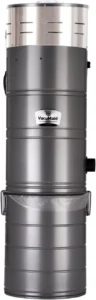
11. VacuMaid P112 Cyclonic Central Vacuum Power Unit
The VacuMaid P112 is another cyclonic model to compare, especially if you want to examine different power-unit designs within the same brand. Manufacturer information lists 651 air watts, 149 CFM, and a 27-quart dirt capacity. It also describes a two-stage tangential bypass motor.
The P112’s published airflow and air-watt figures are higher than those listed for the P125p, but that does not automatically make it the right model for every household.
Your home size, pipe layout, cleaning tools, and maintenance preferences should guide the decision. Confirm the current manufacturer’s specifications for the exact version before comparing it with other units.
The 27-quart dirt capacity is useful to note when planning maintenance. A collection container needs to be emptied as required, and a cyclonic system still needs routine care according to the manufacturer’s instructions.
Pros
- Cyclonic collection design.
- Published specifications include 651 air watts and 149 CFM.
- 27-quart dirt capacity.
Things to check
- Compare its installation requirements with your home and existing system.
- Confirm what accessories are included in the current listing.
- Check maintenance instructions and the warranty terms.
Who should consider it? Buyers comparing cyclonic central vacuum units who want to review the P112 alongside the P125p and other power units.
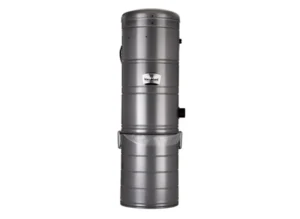
12. Imperium CV300 Central Vacuum Power Unit
The Imperium CV300 is worth considering if you are comparing central vacuum power units with steel construction and published noise information. Product information lists 740 air watts and a noise rating of about 58 dB.
Noise figures depend on how and where a unit is measured, so use the rating as a comparison point rather than a promise of exactly how loud it will sound in your installation.
One of the benefits of a central vacuum system is that the motor can be installed away from the main living areas.
The location of the power unit and whether the exhaust is vented outside can affect the sound you hear inside the home. If noise is a concern, plan the installation location carefully.
The CV300 should also be compared on practical details such as container capacity, filter or bag requirements, compatible accessories, and warranty. Confirm these details for the exact model and seller before buying.
Pros
- Published 740-airwatt rating.
- Steel construction.
- Published noise rating of about 58 dB.
Things to check
- Confirm the precise warranty terms and coverage.
- Check what is included with the power unit.
- Review the installation location, exhaust requirements, and compatibility with your pipe system.
Who should consider it? Homeowners who want to compare a steel central vacuum power unit and are paying attention to published noise information.

How to Choose the Best Central Vacuum System for Your Home
After comparing the models, the next step is to decide which features matter most for your property. A central vacuum can be a long-term purchase, so take time to check the complete installation rather than choosing by one specification.
1. Check Whether You Need a Power Unit or a Complete Kit
This is one of the most important details. A power unit is the motor and dirt-collection part of the system. A complete kit may also include a hose, wand, floor tool, electric power nozzle, and other cleaning accessories.
If your home already has central vacuum piping and compatible tools, a replacement power unit may be enough.
If you are starting from scratch, you may need piping, wall inlets, a hose, and cleaning tools as well as the power unit. Compare the total cost of everything required, not just the headline product price.
2. Choose the Right Power for Your Home
Air watts are often used to compare central vacuum systems, but they are not the only measure of performance.
Airflow and water lift describe different aspects of the system. You should also consider the manufacturer’s recommended home size and number of inlets.
A large home with long pipe runs may have different needs from a small home with a simple layout. If you have thick carpet, ask whether the cleaning kit includes a suitable powered brush. For hard floors, the floor tool design may be more important than buying the highest-rated motor.
3. Decide Between Bagged, Bagless, and Hybrid Filtration
Central vacuum systems use different methods to collect dirt. Bagged systems collect debris in a disposable bag, while cyclonic systems separate dirt through spinning airflow and collect it in a container. Hybrid systems may support more than one collection method, depending on the model.
A bagged system can be convenient if you prefer to remove and replace a collection bag rather than emptying a container.
A cyclonic system may appeal to buyers who prefer not to rely on disposable bags, but the dirt container still needs to be emptied and maintained. Follow the manufacturer’s instructions for the particular model you choose.
Also Read: Top 8 Best Vacuum Sealer Consumer Reports: Save Money & Keep Food Fresh
4. Think About Dirt Capacity
A larger canister can hold more debris before it needs to be emptied. That may be useful in a busy household or a large home.
However, a bigger canister also takes up more space, so measure the installation area before purchasing.
Do not choose a unit based on capacity alone. Make sure the unit fits the space, has the required clearance, and can be maintained easily.
5. Check Noise and Exhaust Requirements
Central vacuum power units are usually installed away from the rooms being cleaned. This can reduce the noise you hear while vacuuming compared with using a portable vacuum in the same room. However, the sound level depends on the unit, installation location, and exhaust arrangement.
Check whether the manufacturer recommends venting the exhaust outside and whether your planned location supports that setup. Do not assume that a published decibel figure will be the same in every home.
6. Confirm Installation Compatibility
If you are replacing an existing unit, check the pipe connection, inlet system, electrical requirements, and cleaning accessories. Similar-looking systems do not necessarily use the same connections or controls.
For a new installation, consider where the power unit will sit, how piping will reach the rooms, where wall inlets should be placed, and whether the work requires an electrician or professional installer. Installation costs can make a meaningful difference to the total budget.
7. Read the Warranty Carefully
A warranty may cover the motor, housing, parts, or labor for different periods. These terms are not interchangeable.
Check what is covered, whether registration is required, how service is handled, and whether the warranty applies to the seller and model you are buying.
Also consider parts availability and customer support. A system that is easy to maintain and repair may be more convenient over the long term than one chosen only for its advertised power.
Central Vacuum System vs. a Regular Vacuum Cleaner
A central vacuum system can be a practical choice for some homes, but it is not automatically better for everyone.
- Central vacuum: The motor stays in a fixed location, and you use a hose connected to wall inlets. It can be convenient for larger homes but requires suitable piping and installation.
- Upright vacuum: A common option for homes with carpet. It does not require built-in piping, but you have to move the complete machine between rooms.
- Canister vacuum: The motor and dust container are separate from the cleaning head. It can be useful for different floor types, although the complete unit still needs to be moved around.
- Stick vacuum: Usually chosen for quick cleanups and easy storage. Battery life and dust capacity vary by model.
- Robot vacuum: Can help with routine floor maintenance, but it may not replace a full vacuum for stairs, upholstery, tight corners, or deep cleaning.
If your home is already equipped with central vacuum piping, replacing an older power unit may make sense.
If you live in a small home or rental property without piping, a regular vacuum may be the simpler and less expensive option.
Frequently Asked Questions about Best Central Vacuum System Consumer Reports
Q. What is the best central vacuum system for most homes?
Ans. There is no single best model for every home. The OVO 700 Airwatts range is worth comparing if you want a whole-home power unit, while the Prolux CV12000, Broan-NuTone units, VacuMaid cyclonic models, and Imperium CV300 offer other designs to consider. Choose based on your home layout, filtration preference, accessories, installation needs, and budget.
Q. Does Consumer Reports recommend a specific central vacuum system?
Ans. This guide does not claim that Consumer Reports recommends any of the listed models. We could not verify current Consumer Reports ratings that directly apply to these products.
Check Consumer Reports’ own current coverage if you need its specific testing results or recommendations.
Q. Are central vacuum systems worth the cost?
Ans. They may be worth considering if you own a home with suitable space for piping and want the convenience of a fixed power unit.
The value depends on installation costs, how often you clean, your home size, and how long you plan to stay in the property. A portable vacuum may be more practical for a small home or a rental.
Q. Is a higher air-watt rating always better?
Ans. No. Air watts are useful for comparison, but airflow, water lift, filtration, the cleaning head, pipe layout, and the home’s needs also matter.
Compare the full specifications and manufacturer recommendations rather than selecting a model based on air watts alone.
Q. What is the difference between a central vacuum power unit and a kit?
Ans. A power unit is the motor and collection unit. A kit may include a hose, wand, floor tools, and other accessories. Read the package details carefully so you do not end up needing to buy essential parts separately.
Q. Which is better: bagged or bagless central vacuum?
Ans. It depends on your preference. Bagged systems allow you to remove a collection bag, while bagless or cyclonic models use a container that needs to be emptied and maintained.
Consider dust handling, replacement supplies, and the manufacturer’s maintenance instructions.
Q. Can I replace my existing central vacuum power unit myself?
Ans. Some straightforward replacements may be manageable for a capable homeowner, but compatibility and electrical requirements must be checked first.
Installing new piping, modifying wiring, or changing wall inlets can be more involved. Use a qualified installer when the job goes beyond your skills or the manufacturer’s instructions require professional work.
Q. Do central vacuum systems include hoses and cleaning tools?
Ans. Some listings are for power units only, while others are complete kits. Check the product description and the package contents before buying.
Pay particular attention to whether an electric power nozzle is included if you plan to clean carpet.
Q. How often should I empty or maintain a central vacuum system?
Ans. The schedule depends on the collection capacity, filtration design, and how much you vacuum. Follow the manufacturer’s instructions for emptying the canister or replacing bags, cleaning filters, and checking the system. Do not wait until performance drops before carrying out routine maintenance.
Final Verdict on best central vacuum system Consumer Reports
The best central vacuum system is the one that fits your home, installation, and cleaning routine—not simply the model with the biggest number in its product title.
If you want to compare whole-home OVO options, start with the 630-airwatt kits and the 700-airwatt models, then consider whether the 750-airwatt unit offers the features you need.
If you are replacing a power unit, compare the Prolux CV12000 and Broan-NuTone models against your existing pipework and accessories.
For cyclonic collection, look at the VacuMaid P125p and P112. If steel construction and published noise information matter to you, include the Imperium CV300 in your comparison.
Before you make a final decision, check the current Amazon USA listing for the exact model, confirm whether accessories are included, review warranty details, and calculate the full cost of installation. These steps will help you make a more informed purchase and avoid paying for a system that does not match your home.
Our final advice: Compare at least two or three compatible models, focus on the complete system rather than one specification, and choose the option that best matches your home and maintenance preferences.
| Product | Best reason to consider it | What to check before buying | Pricing |
|---|---|---|---|
| OVO 630 Airwatts with 30-ft Kit | Included cleaning accessories | Kit contents and hose compatibility | Check Price On Amazon |
| OVO 630 Airwatts with 35-ft Kit | Longer hose reach | Whether the longer hose suits your inlet layout | Check Price On Amazon |
| OVO 700 Airwatts, 25L | Whole-home cleaning with a medium-size canister | Recommended home size and filtration setup | Check Price On Amazon |
| OVO Heavy Duty 700 Airwatts, 35L | Large dirt capacity | Available installation space and included accessories | Check Price On Amazon |
| OVO 750 Airwatts | Higher advertised power | Canister size, package contents, and electrical requirements | Check Price On Amazon |
| Prolux CV12000 | Power-unit replacement or new system planning | Whether you need a unit only or a complete kit | Check Price On Amazon |
| Broan-NuTone PP5501 | 550-airwatt power-unit option | Compatibility with existing pipework and inlets | Check Price On Amazon |
| Broan-NuTone PP6501 | Higher-power option within the range | Exact model specifications and included components | Check Price On Amazon |
| Broan-NuTone PP7001 | 700-airwatt power-unit option | Installation compatibility and filtration requirements | Check Price On Amazon |
| VacuMaid P125p | Cyclonic filtration design | Canister capacity and cleaning accessories | Check Price On Amazon |
| VacuMaid P112 | Cyclonic design and advertised airflow performance | Whether the power unit meets your home’s needs | Check Price On Amazon |
| Imperium CV300 | Steel construction and published noise rating | Included components and installation requirements | Check Price On Amazon |