
Finding the right sewing machine can be surprisingly difficult. Walk into an online marketplace and you’ll find compact beginner machines, computerized models with dozens or hundreds of stitch choices, heavy-duty machines designed for thicker materials, quilting machines, and premium machines built for experienced sewists.
The problem is that a higher price or a longer list of stitches doesn’t automatically make one machine better than another.
A beginner may actually have a better experience with a relatively simple machine, while an experienced garment maker may quickly outgrow it.
Someone who mostly hems pants needs different features from someone who regularly works with quilts or several layers of denim.
That’s why searches for best consumer reports sewing machines are understandable. Buyers want an objective way to narrow down the choices.
Top 9 Best Consumer Reports Sewing Machines
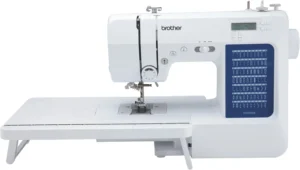
1. Brother CS7000X — Best Overall
The Brother CS7000X is our strongest all-around choice for shoppers who want one machine capable of handling everyday sewing, garments, crafts, basic quilting, and home projects.
It uses computerized controls rather than traditional mechanical dials and provides 70 built-in stitches, including utility, decorative, heirloom, and quilting stitches.
It’s comes with seven one-step auto-size buttonhole styles, an automatic needle threader, a drop-in bobbin, and a wide table.
Best For
- Beginners who want room to grow
- Home sewing
- Clothing
- Crafts
- Quilting
- Intermediate sewists
Why We Like It
The biggest advantage is balance. You don’t have to spend premium-machine money to get computerized controls and a substantial stitch selection.
The LCD interface also makes stitch selection easier than working through numerous mechanical dials.
Pros
- 70 built-in stitches
- Computerized controls
- Multiple one-step buttonholes
- Automatic needle threader
- Useful for quilting and general sewing
- Wide table included
Cons
- More complicated than a basic mechanical machine
- Not designed as a dedicated heavy-duty machine
- LED lighting may not satisfy every user
Who Should Avoid It?
Someone who only wants a very basic machine for occasional hemming may save money with the XM2701 or Janome 2212.

2. Brother CS5055 — Best Value Computerized Machine
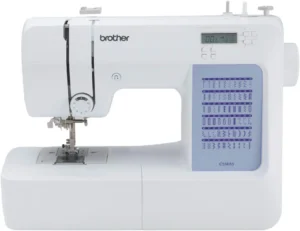
The Brother CS5055 is an attractive alternative when you want computerized operation without moving into a higher-priced machine.
It’s comes with 60 built-in stitches, seven one-step auto-size buttonholes, an automatic needle threader, drop-in bobbin, seven included feet, and a metal frame with a fixed needle bar.
Best For
- Beginners
- Home sewing
- Clothing
- Crafts
- Alterations
- Budget-conscious shoppers
Pros
- 60 built-in stitches
- LCD display
- Automatic needle threader
- Drop-in bobbin
- Metal frame
- Good feature-to-price balance
Cons
- Not a true heavy-duty machine
- Less quilting workspace than larger dedicated machines
- Some beginners may not need all 60 stitches
Who Should Avoid It?
Choose a mechanical machine instead if you prefer simple knobs and fewer electronic controls.
3. Brother XM2701 — Best for Beginners
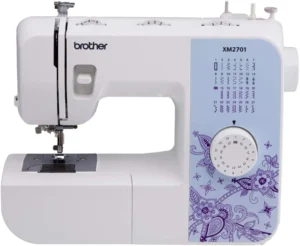
For someone buying their first sewing machine, the Brother XM2701 makes a lot of sense. It has 27 built-in stitches, including decorative, blind-hem, zigzag, and stretch stitches, along with an auto-size buttonhole.
It’s comes with automatic needle threader, drop-in top bobbin, six sewing feet, and free-arm functionality.
Best For
- First-time sewists
- Students
- Basic alterations
- Clothing repairs
- Crafts
- Occasional home sewing
Pros
- Simple operation
- 27 stitches
- Automatic needle threader
- Drop-in bobbin
- Free arm
- Relatively compact
Cons
- Limited compared with advanced computerized machines
- Not ideal for extensive heavy-duty sewing
- Fewer advanced quilting features
Who Should Avoid It?
Experienced sewists who need extensive stitch customization or advanced quilting features should consider the XR9550 or CS7000X.
4. Brother ST371HD — Best for Alterations
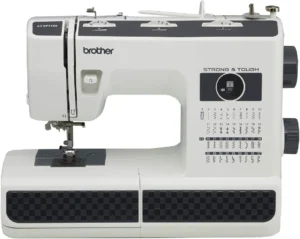
The Brother ST371HD Strong & Tough sits between a beginner-friendly machine and a heavier mechanical workhorse.
The model offers 37 built-in stitches, an auto-size buttonhole, automatic needle threading, a drop-in bobbin, free-arm capability, and six included feet.
Best For
- Alterations
- Clothing repairs
- Beginners wanting a sturdier machine
- Home sewing
- Light-to-moderate heavier fabrics
Pros
- 37 stitches
- Mechanical controls
- Strong construction
- Free arm
- Automatic needle threader
- Useful for everyday alterations
Cons
- Less sophisticated than computerized machines
- Not intended to replace an industrial machine
- Heavy fabrics still require appropriate needles and techniques
5. SINGER 4423 — Best Heavy-Duty Sewing Machine
The SINGER 4423 is one of the most recognizable choices for shoppers specifically searching for a heavy-duty home sewing machine.
It combines a metal interior frame with a stainless-steel bedplate, a high sewing speed, 23 built-in stitches, and 97 stitch applications.
This model offers top drop-in bobbin and automatic needle-threading system.
Best For
- Denim
- Canvas
- Home décor
- Clothing
- Repairs
- Frequent home sewing
Pros
- Heavy-duty construction
- 1,100-stitch-per-minute maximum speed
- 23 built-in stitches
- Automatic needle threader
- Top drop-in bobbin
- Strong fabric-feeding capability
Cons
- Fewer stitch choices than computerized machines
- Mechanical controls aren’t as automated
- Heavy-duty doesn’t mean it can replace an industrial machine
Who Should Avoid It?
If most of your sewing involves delicate garments and decorative stitches, a computerized Brother may provide more useful functionality.
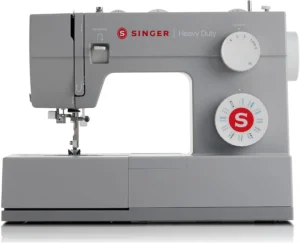
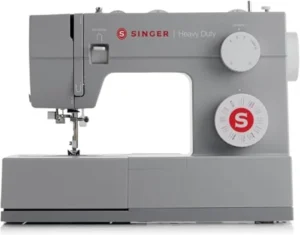
6. SINGER 4432 — Mechanical Heavy-Duty Alternative
The SINGER 4432 is another strong option for shoppers who want mechanical operation and a more robust machine.
Comes with a mechanical/electromechanical design and a 1-step buttonhole system.
It provides more stitch applications than a minimalist mechanical machine while retaining the straightforward control style many traditional sewists prefer.
Best For
- Home sewing
- Denim
- Canvas
- Alterations
- Repairs
- Intermediate users
Pros
- Heavy-duty construction
- Mechanical controls
- 1-step buttonhole
- Good range of stitch applications
- Suitable for many everyday fabrics
Cons
- Less automation
- Limited compared with advanced computerized machines
- Not a dedicated quilting machine
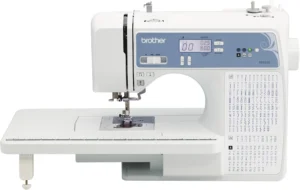
7. Brother XR9550 — Best for Experienced Sewists
The Brother XR9550 is the machine to consider when you want significantly more stitch variety without moving into an expensive specialty machine.
The current model information lists 165 built-in stitches, including 110 utility, decorative and heirloom stitches plus 55 alphanumeric stitches.
It also includes eight styles of auto-size buttonholes, an automatic needle threader, LCD display, wide table, and multiple sewing/quilting feet.
Best For
- Intermediate sewists
- Experienced home sewists
- Quilters
- Garment makers
- Decorative sewing
Pros
- 165 stitches
- LCD display
- Alphanumeric stitches
- Multiple buttonhole styles
- Wide table
- Quilting-friendly accessories
Cons
- More expensive than basic machines
- Can be unnecessarily complicated for occasional users
- Not intended for industrial-level heavy fabrics
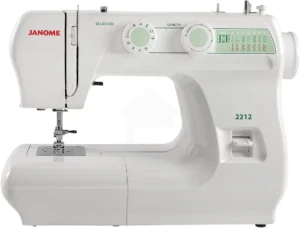
8. Janome 2212 — Best Traditional Mechanical Choice
The Janome 2212 is a straightforward mechanical machine aimed at shoppers who don’t need an enormous collection of computerized stitches.
Best For
- Traditional sewists
- Beginners who prefer mechanical controls
- Basic garment sewing
- Alterations
- Home projects
Pros
- Straightforward controls
- Mechanical design
- Good choice for basic sewing
- Free-arm functionality
- Established sewing-machine brand
Cons
- Fewer stitches than computerized alternatives
- Less automation
- Not the best choice for advanced decorative sewing
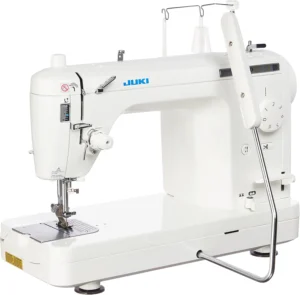
9. JUKI TL-2000Qi — Best for Quilting
For serious quilting and precision sewing, the JUKI TL-2000Qi is in a different category from compact beginner machines.
It’s comes with a 1,500-stitches-per-minute maximum speed, automatic needle threader, aluminum die-cast arm and bed, and included extension table.
Best For
- Quilters
- Experienced sewists
- Large projects
- Precision straight stitching
- Home décor
Pros
- Excellent quilting orientation
- Large work area
- 1,500 SPM maximum speed
- Automatic needle threader
- Stable construction
- Extension table
Cons
- Much more expensive than beginner machines
- Specialized compared with multi-stitch machines
- Not the best choice for someone wanting hundreds of decorative stitches
Who Should Avoid It?
A beginner who is unsure whether they’ll continue sewing probably shouldn’t start with this level of machine.
How We Evaluated These Sewing Machines
Our comparison considers the factors that matter most when selecting a home sewing machine:
Sewing Performance
A machine should produce consistent stitches without requiring unnecessary adjustments for ordinary projects.
Ease of Threading
Automatic needle threading can make a noticeable difference for beginners and anyone who finds threading a needle difficult.
Bobbin Convenience
A drop-in bobbin is often easier for new users because the bobbin can be inserted from the top and monitored through a transparent cover.
Fabric Handling
Different machines are suited to different materials. Cotton, lightweight fabric, denim, canvas, multiple quilt layers, and stretchy materials can behave very differently.
Stitch Selection
More stitches aren’t automatically better. What matters is whether the machine provides useful straight, zigzag, stretch, blind-hem, decorative, and buttonhole options.
Buttonholes
Automatic one-step buttonholes are generally more convenient than manually balancing multiple steps.
Speed Control
Beginners often benefit from controlled sewing speeds, while experienced sewists may prioritize maximum speed.
Build Quality
Frame construction, machine stability, weight, and internal components can affect how comfortable a machine feels during sewing.
Accessories
Presser feet, extension tables, needles, bobbins, and other included accessories can significantly affect overall value.
Customer Feedback
Customer feedback can reveal recurring usability issues, but online reviews should not be treated as laboratory testing.
Value
The final question is simple: does the machine provide the right capabilities for its intended user at a reasonable cost?
Types of Sewing Machines Explained
| Type | Ease of Use | Features | Durability | Portability | Best For |
|---|---|---|---|---|---|
| Mechanical | High | Moderate | Good | Good | Traditional sewing |
| Computerized | Very High | High | Good | Good | Home sewing |
| Heavy-Duty | Moderate | Moderate | Very Good | Moderate | Thick fabrics |
| Portable | High | Basic–Moderate | Moderate | Excellent | Beginners/occasional use |
| Quilting | Moderate | Specialized | Very Good | Moderate | Quilters |
| Embroidery-capable | Moderate | Very High | Varies | Low–Moderate | Decorative embroidery |
Mechanical Sewing Machines
Mechanical machines use physical dials and controls. They’re often easier to understand once you learn what each dial does.
Advantages: simple controls, fewer electronics, familiar operation.
Disadvantages: less automation and fewer advanced features.
Computerized Sewing Machines
Computerized machines use buttons and digital displays to select stitches and settings.
They’re particularly useful when you want numerous stitches, automatic buttonholes, speed control, and repeatable settings.
Heavy-Duty Sewing Machines
These machines emphasize stronger construction and the ability to work with heavier fabrics.
However, “heavy-duty” doesn’t mean the machine is suitable for every extremely thick material. Needle type, thread, presser foot, fabric layers, and sewing technique still matter.
Portable Sewing Machines
Portability is useful if you store the machine between projects or move it between rooms. The tradeoff is that lightweight machines may not provide the same stability as heavier machines.
Quilting Machines
Quilting often benefits from a larger work area, stable feeding, appropriate presser feet, and a machine capable of handling multiple fabric layers.
Embroidery-Capable Machines
These machines are designed for decorative machine embroidery in addition to conventional sewing.
They can be useful for monograms and decorative designs but are often unnecessary for someone who primarily wants to hem clothes or repair garments.
Mechanical vs. Computerized Sewing Machines
| Feature | Mechanical | Computerized |
|---|---|---|
| Ease of learning | Simple | Simple after learning controls |
| Stitch selection | Dials | Buttons/LCD |
| Automation | Lower | Higher |
| Learning curve | Low | Moderate |
| Precision | Good | Excellent |
| Speed control | Usually pedal-based | Often additional controls |
| Maintenance | Generally straightforward | More electronics |
| Price | Often lower | Moderate to high |
| Best User | Traditional sewist | Beginner/intermediate/advanced |
Which Is Better for Beginners?
There’s no universal answer. A beginner who wants simple controls may prefer a mechanical machine such as the XM2701.
A beginner who wants guided stitch selection and plans to explore different projects may prefer the CS7000X or CS5055.
Which Is Better for Advanced Users?
Computerized machines generally offer more flexibility, especially for decorative sewing, quilting, buttonholes, and garment projects.
However, experienced sewists who value simplicity and control may still prefer mechanical machines.
Also Read: Best Portable Air Conditioner Consumer Reports: Top 9 Picks for Efficient Home Cooling
Best Sewing Machine Complete Buying Guide
1. Consider Your Skill Level
Don’t buy a machine designed for an expert if you’re only planning to make occasional repairs.
2. Choose the Machine Type
Decide between mechanical, computerized, heavy-duty, quilting, or embroidery-focused models.
3. Don’t Obsess Over Stitch Count
A machine with 165 stitches isn’t necessarily better for you than one with 27. Most everyday sewing uses a relatively small collection of stitches.
4. Look at Stitch Quality
Straight, consistent stitches matter more than having hundreds of decorative patterns.
5. Check Buttonhole Options
Automatic one-step buttonholes can make garment construction much easier.
6. Consider an Automatic Needle Threader
This is particularly helpful for beginners and frequent sewists.
7. Check the Bobbin System
A jam-resistant drop-in bobbin is convenient and easy to monitor.
8. Consider Sewing Speed
High speed is useful for experienced users but isn’t necessarily an advantage for beginners.
9. Look for Speed Control
Computerized machines can make controlled sewing easier.
10. Check for a Free Arm
A free arm is useful for cuffs, sleeves, pant legs, and other narrow areas.
11. Examine Included Presser Feet
The right presser foot can make zippers, buttonholes, quilting, and other techniques easier.
12. Check Needle Positions
Multiple needle positions can help with edge stitching and certain construction techniques.
13. Think About Heavy-Duty Construction
If you’re regularly sewing denim or canvas, prioritize construction and fabric handling rather than decorative stitches.
14. Quilters Need Workspace
A larger work area can make managing large quilts much easier.
15. Consider Noise
If you’ll sew for long sessions, machine noise and vibration can affect comfort.
16. Think About Weight
Heavy machines are generally less convenient to move but may feel more stable.
17. Check Warranty Information
Warranty terms vary by brand and model. Always verify current terms before buying.
18. Look at Accessories
An apparently inexpensive machine may become less attractive if essential feet or accessories must be purchased separately.
19. Consider Maintenance
Clean lint regularly and follow the manufacturer’s maintenance instructions.
20. Think About Long-Term Value
The best machine is one you’ll actually use.
Best Sewing Machines by Use
Best Sewing Machine for Beginners – Brother XM2701
Its straightforward operation, 27 stitches, automatic needle threader, free arm, and drop-in bobbin make it a sensible starting point.
Best Sewing Machine for Home Use – Brother CS7000X
Its combination of stitches, computerized controls, quilting functionality, and general-purpose versatility makes it a strong home-use option.
Best Sewing Machine for Quilting – JUKI TL-2000Qi
Its large work area, high speed, stable construction, and quilting orientation make it especially attractive for serious quilters.
Best Sewing Machine for Alterations – Brother ST371HD
The free arm, mechanical controls, 37 stitches, and strong construction make it particularly useful for everyday alterations.
Best Sewing Machine for Heavy-Duty Sewing – SINGER 4423
Its heavy-duty frame and high-speed motor are well suited to many thicker home-sewing projects.
Best Sewing Machine for Clothing – Brother CS7000X
The variety of utility, stretch, decorative, and buttonhole functions gives garment makers plenty of flexibility.
Best Computerized Sewing Machine – Brother XR9550
Its 165 built-in stitches and LCD-based controls make it a strong choice for users who want a wider selection of computerized functions.
Best Mechanical Sewing Machine – Janome 2212
It’s a good choice for someone who prefers traditional controls and doesn’t need extensive computerized functionality.
Best Portable Sewing Machine – Brother XM2701
Its relatively compact form and lightweight-oriented design make it convenient for users who don’t want a bulky machine.
What Can You Sew With These Machines?
Depending on the model, needle, thread, presser foot, and fabric, a home sewing machine can be used for:
- Shirts
- Dresses
- Pants
- Skirts
- Curtains
- Pillow covers
- Quilts
- Costumes
- Home décor
- Clothing repairs
- Alterations
- Crafts
- Bags
- Household projects
Remember that machine suitability depends on more than the machine itself.
Fabric thickness, number of layers, needle size, thread weight, presser foot, stitch selection, and manufacturer instructions all matter.
Sewing Machine Maintenance Tips
Clean Lint Regularly
Lint can accumulate around the bobbin area and feed dogs.
Clean the Bobbin Area
Follow the manufacturer’s cleaning instructions rather than using aggressive tools.
Change Needles
A dull or damaged needle can cause skipped stitches, fabric damage, and poor sewing performance.
Oil Only When Appropriate
Don’t automatically oil a modern sewing machine. Some machines are designed not to require user lubrication.
Thread Correctly
Incorrect threading can cause tension problems, thread breaks, and poor stitches.
Store Properly
Use the machine’s cover when available and keep it away from excessive dust and moisture.
Get Professional Service When Necessary
If the machine develops mechanical or electrical problems, consult the manufacturer or a qualified service professional.
Common Sewing Machine Buying Mistakes
Buying Based Only on Stitch Count
You probably don’t need hundreds of stitches for basic sewing.
Ignoring Weight
A lightweight machine is convenient but may move around more during sewing.
Choosing Only by Price
The cheapest machine isn’t necessarily the best value.
Ignoring Warranty
Warranty support can matter significantly when buying an electronic or computerized machine.
Choosing a Machine Too Weak for Your Projects
If you’re constantly sewing several layers of denim or canvas, a basic lightweight machine may frustrate you.
Ignoring Included Feet
Presser feet can dramatically expand what you can comfortably sew.
Ignoring Replacement Parts
Make sure needles, bobbins, feet, and other compatible parts are reasonably accessible.
Buying Too Much Machine
A premium machine can be wasted money if you’re only hemming pants twice a year.
Sewing Machine Safety
Sewing machines contain moving mechanical parts and a sharp needle, so basic safety matters.
- Keep fingers away from the needle.
- Turn off the machine before changing the needle.
- Unplug the machine before cleaning when appropriate.
- Keep electrical cords away from water.
- Follow the manufacturer’s operating instructions.
- Don’t operate a machine around young children without supervision.
- Keep loose clothing and hair away from moving parts.
- Use the correct needle for the material.
- Stop sewing if the machine begins behaving abnormally.
Frequently Asked Questions about Best Sewing Machines
Q. What are the best sewing machines Consumer Reports recommends?
Ans. Rather than attributing recommendations to Consumer Reports without verification, shoppers can use factors such as stitch quality, ease of use, durability, fabric handling, features, and value to compare machines.
Q. What sewing machine has the best ratings?
Ans. There isn’t one universally highest-rated sewing machine for every user. A beginner, quilter, garment maker, and heavy-duty sewist can reasonably prefer different machines.
Q. What are the best rated sewing machines Consumer Reports?
Ans. For an independent comparison, the Brother CS7000X, Brother XR9550, SINGER 4423, and JUKI TL-2000Qi are among the stronger choices in their respective categories.
Q. What should I look for in a sewing machine?
Ans. Start with your projects. Then consider machine type, stitch selection, buttonholes, threading, bobbin design, speed control, free arm, included feet, construction, warranty, and price.
Q. Is Brother better than Singer?
Ans. Neither brand is automatically better. Brother offers many beginner-friendly computerized machines, while Singer has several popular mechanical and heavy-duty models. Choose based on your intended projects.
Q. Is Janome better than Brother?
Ans. Again, it depends on the user. Janome has strong mechanical and computerized machines, while Brother offers many feature-rich machines at accessible price points.
Q. Are computerized sewing machines better than mechanical ones?
Ans. Not necessarily. Computerized machines usually offer more automation and stitch-selection flexibility. Mechanical machines can be simpler and appealing to users who prefer traditional controls.
Q. What is the best sewing machine for beginners?
Ans. The Brother XM2701 is a strong beginner option because it combines relatively straightforward controls with 27 stitches, an automatic needle threader, a drop-in bobbin, and free-arm functionality.
Q. What is the best sewing machine for quilting?
Ans. The JUKI TL-2000Qi is a strong choice for serious quilting because it is designed around high-speed precision sewing and provides a larger work area with an extension table.
Q. What is the best heavy-duty sewing machine?
Ans. The SINGER 4423 is one of the strongest choices in this comparison for heavy-duty home sewing because of its heavy-duty construction and high sewing speed.
Q. How long does a sewing machine usually last?
Ans. There isn’t one guaranteed lifespan. Usage frequency, maintenance, machine construction, storage, and servicing all affect longevity.
Q. Are expensive sewing machines worth it?
Ans. They can be if you use advanced features regularly. If your projects are basic, an affordable machine may provide better value.
Q. What sewing machine is best for home use?
Ans. For a broad range of household projects, the Brother CS7000X is a strong all-purpose option because it combines computerized controls, numerous stitches, buttonhole choices, and quilting-related functionality.
Final Verdict on Best Consumer Reports Sewing Machines
The best sewing machine isn’t necessarily the one with the highest price or the most stitches. It’s the machine that matches your sewing style.
🏆 Best Overall — Brother CS7000X
The best balance of features, usability, versatility, and value for many home sewists.
💰 Best Budget — Brother CS5055
A strong value choice for shoppers wanting computerized operation and useful features.
👶 Best for Beginners — Brother XM2701
Simple, approachable, and equipped with the basic features most beginners need.
🧵 Best Computerized — Brother XR9550
A feature-rich choice for intermediate and experienced sewists.
🪡 Best Mechanical — Janome 2212
A straightforward choice for people who prefer traditional controls.
🛏 Best for Quilting — JUKI TL-2000Qi
Our premium choice for serious quilting and precision sewing.
💪 Best Heavy-Duty — SINGER 4423
A practical choice for denim, canvas, repairs, and other demanding home projects.
✂️ Best for Alterations — Brother ST371HD
A strong mechanical option for everyday clothing repairs and alterations.
⭐ Best Premium — JUKI TL-2000Qi
Worth considering when sewing and quilting are serious hobbies rather than occasional activities.
Bottom line:
For the majority of home users, start by comparing the Brother CS7000X, CS5055, XM2701, and ST371HD.
If quilting is your main focus, move toward the JUKI TL-2000Qi. If thick fabrics are the priority, consider the SINGER 4423.
| Sewing Machine | Type | Built-In Stitches | Buttonholes | Speed Control | Needle Threader | Free Arm | Quilting | Pricing |
|---|---|---|---|---|---|---|---|---|
| Brother CS7000X | Computerized | 70 | 7 auto-size | Yes | Yes | Yes | Excellent | Check Price On Amazon |
| Brother CS5055 | Computerized | 60 | 7 auto-size | Yes | Yes | Yes | Very Good | Check Price On Amazon |
| Brother XM2701 | Mechanical | 27 | Auto-size | Foot control | Yes | Yes | Good | Check Price On Amazon |
| Brother ST371HD | Mechanical | 37 | Auto-size | Foot control | Yes | Yes | Good | Check Price On Amazon |
| SINGER 4423 | Mechanical | 23 | 1-step | Foot control | Yes | Yes | Good | Check Price On Amazon |
| SINGER 4432 | Mechanical | 32 | 1-step | Foot control | Yes | Yes | Good | Check Price On Amazon |
| Brother XR9550 | Computerized | 165 | 8 auto-size | Yes | Yes | Yes | Excellent | Check Price On Amazon |
| Janome 2212 | Mechanical | 12 | 4-step | Foot control | Check listing | Yes | Basic | Check Price On Amazon |
| JUKI TL-2000Qi | Mechanical/straight-stitch | — | — | Foot control | Yes | — | Excellent | Check Price On Amazon |